






"We have Facebook" is the most common response a volunteer fire department gives when the topic of a website comes up. It is understandable. Facebook is free, most of your members are already on it, and someone can set up a page in an afternoon. Why would you pay for a website?
Here is why.
Facebook Cannot Be Found on Google
When a resident searches "Millbrook Volunteer Fire Department" on Google, what comes up? Probably a Knowledge Panel pulling from Google's index, a directory listing or two, and — possibly — your Facebook page. But a Facebook page ranks inconsistently in search results. It is not optimized for local search, it does not give Google a clear structure of your organization, and it does not contain the specific content (address, phone, apparatus, staffing) that makes a result useful.
A properly built website with local SEO — your department name, town, county, contact information, and pages about your services — will consistently outrank a Facebook page for searches related to your department. When someone in your district searches for fire department services, your website should be the first result. Facebook is not built to make that happen.
You Do Not Own Your Facebook Page
Meta owns your Facebook page. They can change the algorithm, reduce your organic reach (which they have done repeatedly over the past decade), add advertising around your content, change their terms of service, or shut down your page if they determine it violates a policy. Your community's primary source of information about your fire department exists at the discretion of a private corporation whose interests are not aligned with yours.
Your website is your property. You control the content, the design, the URL, the data, and the experience. If Facebook goes the way of MySpace, your website is unaffected.
Facebook Does Not Meet ADA Requirements
Under Title II of the ADA, your fire department's public-facing digital presence must meet WCAG 2.1 AA accessibility standards. Facebook is a third-party platform — your department is not responsible for Facebook's accessibility, but you are responsible for the content you post there. More importantly, if Facebook is your primary or sole digital presence, you have no control over the accessibility of the platform your community uses to find you.
A compliant website gives you control. You can ensure every image has alt text, every document is accessible, every form is properly labeled. Facebook does not give you that control, and it does not guarantee compliance with your legal obligations.
Facebook Is Not the Right Tool for Emergency Information
When there is an active incident, a road closure, a burn ban, or a public safety notice, where do you post it? Facebook, probably. But who sees it? Only people who follow your page and whose feed algorithm surfaces it. Facebook's organic reach for business and organization pages has declined to single-digit percentages of followers in many cases.
A website with an emergency notice banner that lives at the top of every page, independent of any algorithm, will reach every visitor to your site regardless of whether they follow you on social media. Your website is always available at a direct URL. Facebook requires a login for full functionality and is blocked on many employer networks.
Recruitment Lives or Dies on First Impression
A prospective volunteer searches your department. They land on your Facebook page and see a mix of incident photos, event announcements, and promotional posts going back years with no clear structure. They cannot easily find what training is required, what gear is provided, what the commitment looks like, or how to apply.
Contrast that with a dedicated recruitment page on your website: why join, what to expect, minimum requirements, how to apply, frequently asked questions. It is organized, professional, and designed to convert a curious visitor into an application. Facebook is not built for that experience.
You Are Competing for Recruits
Volunteer departments nationwide are struggling with membership. Your prospective volunteers have options — EMS, community organizations, local fire departments. The departments that present themselves most professionally are the ones who win that competition. A Facebook page projects the digital equivalent of an apparatus bay with no signage.
So Use Both. But Own One.
This is not an argument to abandon Facebook. Post your incidents, your community events, your fundraisers. Use it to keep your current followers engaged. But treat Facebook as an amplification channel, not your primary digital presence.
Your website is the thing you own. It is the thing Google can find. It is the thing that is accessible to every member of your community regardless of their social media habits. It is the professional face of your department when a new resident moves to town and wants to know who protects their street.
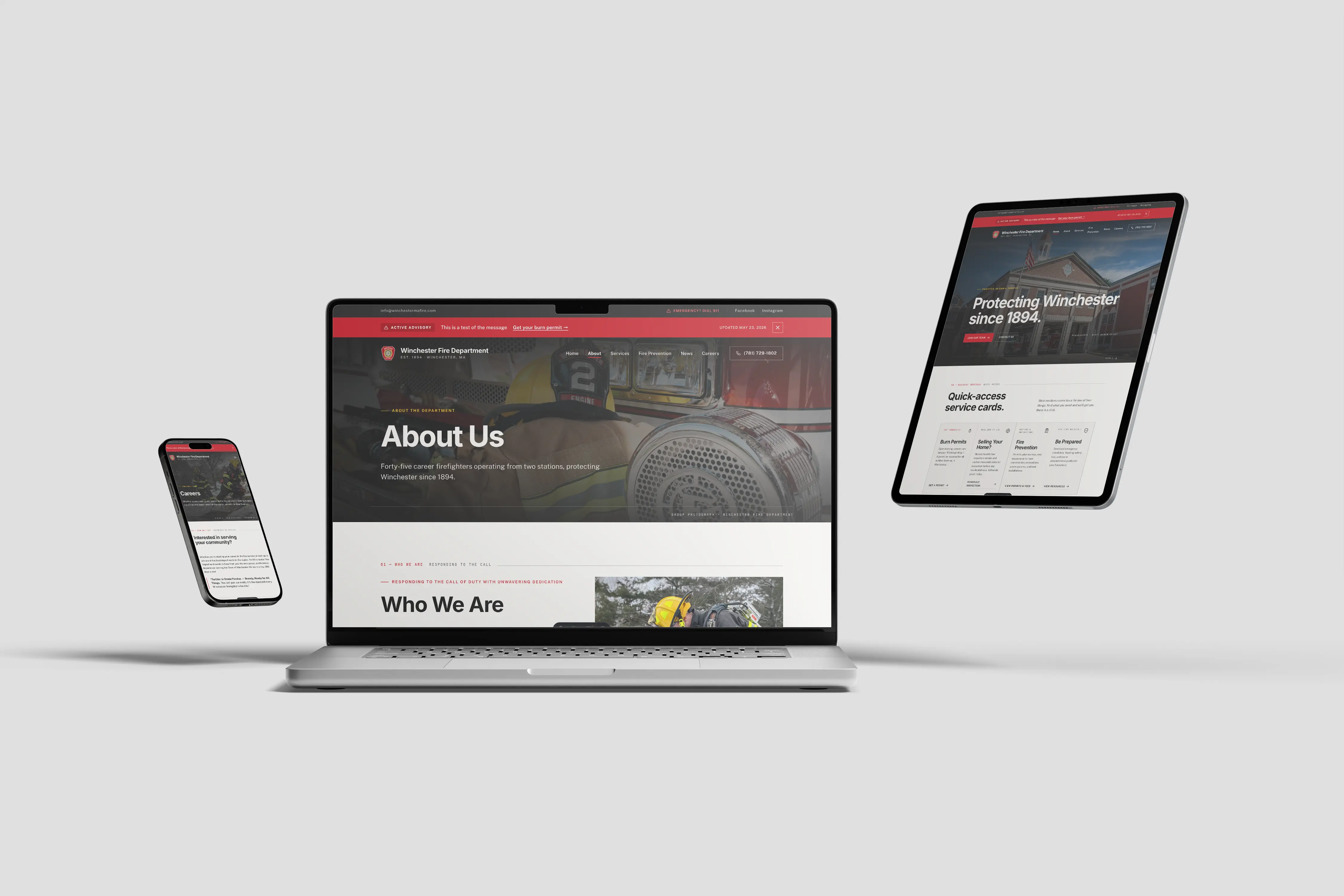
Volunteer fire department websites from The Irons start at $1,500. That is a one-time investment in something you own, that works for your department, and that does not depend on a tech company deciding your content is worth showing.